




Fed calm spoiled by renewed AI jitters, ECB eyed next

 Fed hike bets pared slightly after uneventful meeting
There were no surprises from Wednesday’s FOMC decision, as the Fed left interest rates unchanged as widely expected, while Chair Kevin Warsh stuck to his predictable rhetoric. The vote was not unanimous, however, as there were two dissents – Governor Lisa Cook and Cleveland Fed President Beth Hammack – who both wanted a 25-bps hike.
Whilst Hammack is an outspoken hawk and has dissented twice before this year, this was the first time that Cook, who is under investigation by a Trump-appointed committee for fraud, voted against the majority. Nevertheless, there was only a knee-jerk reaction to the split vote, as Warsh’s press conference did little to bolster expectations that the Fed will tighten policy more than what is priced in by the markets.
There were several clues that the FOMC will resume hiking in December. The statement described economic activity as ‘strong’ versus the ‘solid’ pace seen in September. Warsh’s strongest signal was when he said that although financial conditions are ‘tighter’, he can’t call them ‘tight’.
However, he also made the point that current conditions require only measured tightening, saying he doesn’t think growth is running too hot and that the Fed isn’t going to “throw sand in the gears of the economy”.
This led investors to slightly scale back their rate hike bets, with a third 25-bps increase by the end of 2027 no longer being fully priced in. But perhaps the most important announcement yesterday was that the Fed will reduce the number of decisions to seven in 2027 and six in 2028, to free up meetings to discuss strategy.
Dollar eyes US inflation and GDP data
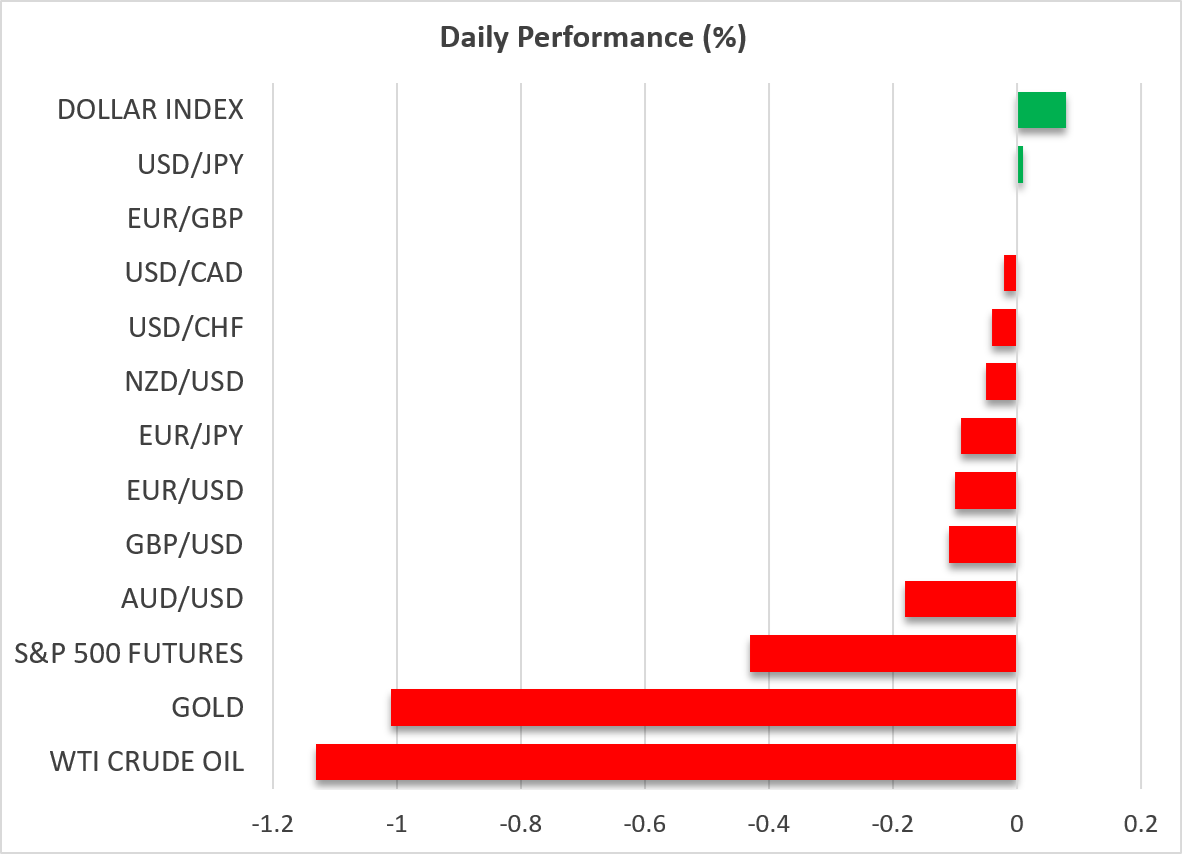
Treasury yields declined after the decision, with the 10-year yield slipping below 5.0% and putting pressure on the US dollar. However, the greenback is on a firmer footing today, edging up towards 157.90 yen ahead of crucial economic indicators due out of the US and the Bank of Japan decision early on Friday.
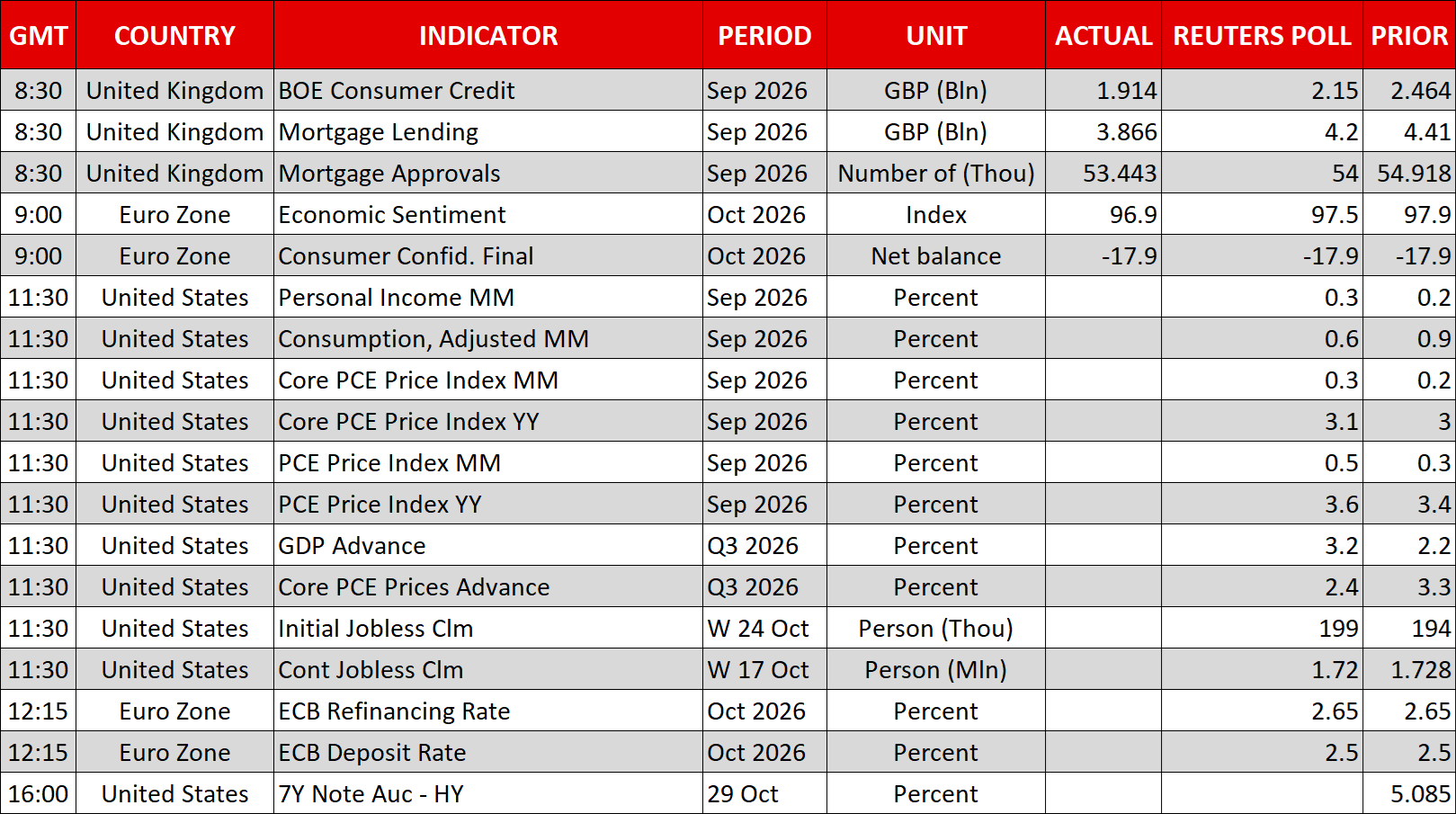
PCE inflation data is expected to show the core PCE price index quickened to 3.1% in September, while GDP growth likely accelerated to 3.2% annualized rate in the third quarter. Stronger readings than the forecasts could undo yesterday’s modest unwinding seen in Fed fund futures.
Not that the dollar needs any additional support these days, as either hot data or risk-off seem to give it a leg up.
Euro treads water ahead of ECB decision
The euro, on the other hand, has been hammered these past two months on worries about the impact of the ongoing energy crisis on the Eurozone economy and doubts about France’s ability to get a grip on burgeoning government borrowing.
The European Central Bank is expected to keep its key lending rates unchanged at 13:15 GMT, amid worries about soaring bond yields. President Lagarde, who just announced she will step down in February 2027, will likely keep a December hike firmly in play, but it will be her comments on how the ECB plans to tackle a possible crisis in the French bond market that will matter most to investors.
The euro was last trading at $1.1129 and the pound is also marginally lower at $1.3305 following a muted response to yesterday’s UK Autumn Budget announcement.
The Canadian dollar was steady around 1.40 to the US dollar, holding on to Wednesday’s gains when the Bank of Canada raised interest rates and kept the door open to further hikes.
Mixed earnings drag Wall Street futures lower
In equity markets, there was little to digest from the Fed meeting, hence, the focus was on the incoming earnings. Microsoft beat both its revenue and earnings per share estimates, as well as expectations for revenue growth in its Azure cloud unit. Its stock rose 3% in afterhours trading, but Alphabet’s stock sunk almost 10% after the company missed its estimates.
Crucially, advertising revenue came in below expectations, raising worries about how the Google owner will be able to continue financing its AI investments if its main income stream is being eroded by competition from AI itself.
Alphabet’s cloud business was the only bright spot, but with Samsung also disappointing investors with its earnings, AI-related stocks are on shaky ground again.
S&P 500 and Nasdaq futures are currently in the red, reversing yesterday’s small gains when Oracle staged a 10.7% rally on positive cash flow projections. The spotlight is now on Amazon.com, which reports after the closing bell.
Oil slides but unable to lift gold
The continued angst around AI valuations and massive selloffs in specific stocks are potentially weighing on other assets such as gold and cryptos, as investors seem more willing to divest those holdings than to rotate out of equities completely.
Gold is down almost 1% even as the Fed is signalling it may not need to hike rates aggressively and oil prices are heading lower. Although the $4,000 support area seems to be holding for now, gold's lack of meaningful rebounds since August is worrying.
Meanwhile, there is a fresh diplomatic push in the Middle East following reports that the US is planning new attacks on Iran after the midterm elections. Qatar has presented Iran with a new peace proposal, with Tehran willing to implement any deal in less than the seven-day timeline it had earlier indicated. US Vice President JD Vance has also reached out to the head of Iran’s Security Council to restart talks.
Yet, markets are apprehensive, as seen by the ‘modest’ 1% drop in oil futures today. There is a lot of scepticism about whether President Trump would sign up to any new ceasefire agreement without trying to squeeze more out of Tehran one final time and in the absence of more substantive developments, this is keeping WTI and Brent futures above $100 and $110 a barrel, respectively.


Gold buying by central banks has hit its highest rate since 2024.
Daily Technical Analysis: Gold Reclaims $3,900 After Hitting Its Lowest Level Since October 2025

Daily Fundamental Analysis: Wall Street Starts November on a Cautious Note Ahead of US Midterm Elections

Bitcoin tests key support as election uncertainty and tech sell-off weigh

Will gold climb back above $4,000?

Crypto turns gloomy

US midterm elections in the spotlight as stock market rout persists