




Oil remains in the driving seat as dollar gains persist

Dollar maintains gains
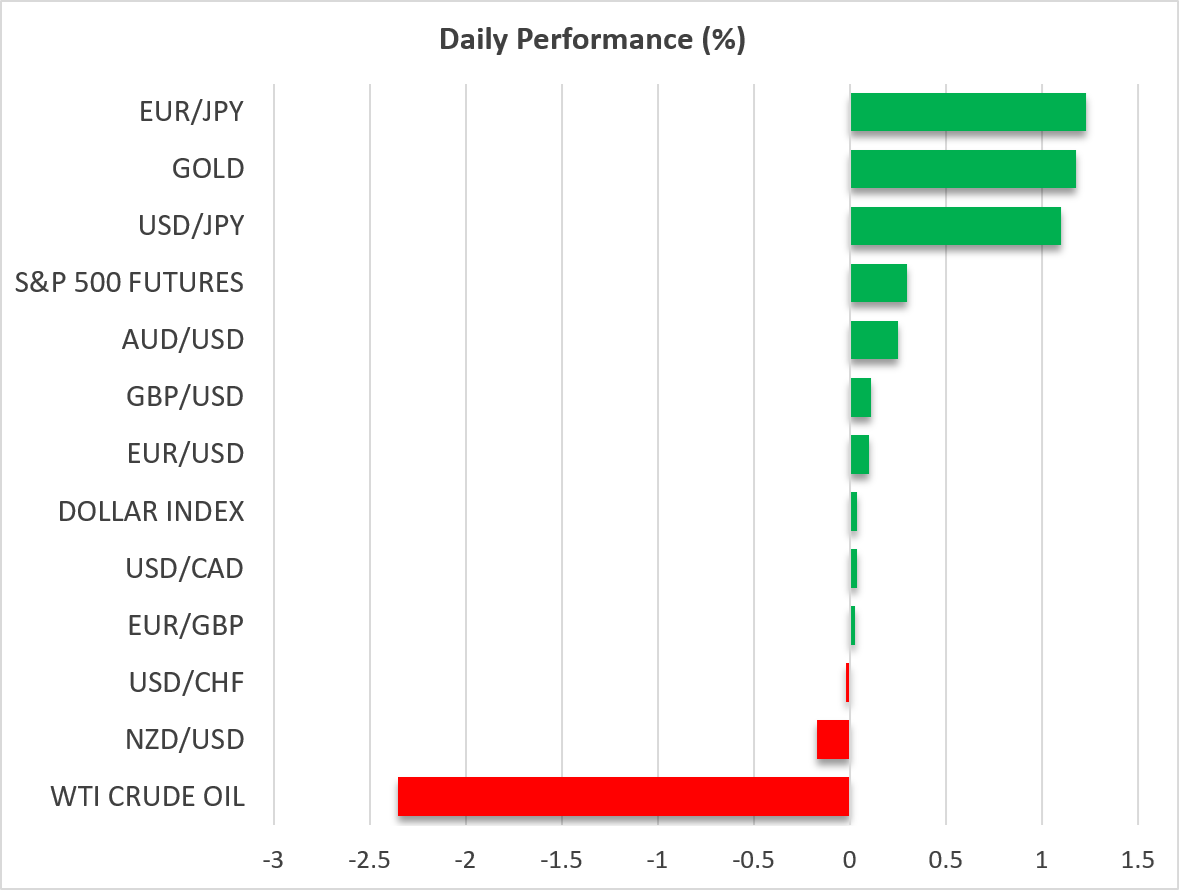
It has been less than 48 hours since the Fed meeting and the impact of the hawkish rhetoric from Chair Warsh and the aggressive dot plot projections remain present in the FX market. The euro is trading near $1.1480 against the US dollar, being down around 1% this week, while pound/dollar is hovering around $1.3364, following the disappointing BoE meeting.
As highlighted in the various central bank meetings this week and the hawkish commentary from RBA Governor Bullock earlier today – she essentially pre-announced the September 29 rate hike currently priced in by markets – the oil price action is the main culprit for the hawkish shift in monetary policy stances, a situation resembling the post-COVID period.
Interestingly, some heavyweight US investment banks have brought forward their Fed hike calls to October. With the market assigning a 50% chance of a back-to-back rate hike from the Fed, such a bet is essentially a bet on a continued oil price rally.
Oil will dictate next policy steps from central banks
WTI oil spot prices have eased from this week’s peak but remain extremely elevated around the $100 threshold. Interestingly, following a period of inaction from the US side, there is increased activity regarding the Middle East. President Trump is scheduled to meet with Gulf leaders next week, while China has apparently requested the intervention of Iran to reopen the Bab al-Mandab Strait, and prevent further Houthi attacks, mostly against Saudi Arabian targets, with Oman also put in the mix for negotiations with the rebels.
Usually, negotiations and behind-closed-doors discussions indicate an attempt to find a peaceful solution to a conflict, but surprisingly that might not be the case this time around. Apparently, President Trump has to make a “big decision” on the course of the US-Iran conflict, with more aggressive military operations, mostly targeting power plants and oil installations, being on the table.
However, this could mean another rally in oil prices, just 46 days before the critical US midterm elections, severely damaging the Republicans’ ambitions of retaining control of Congress. Interestingly, even before another potential round of oil price rises, the latest projections point to increased chances of Democrats achieving a majority in both the Senate and the House of Representatives.
Obviously, a possible agreement between the US and Iran to allow the free flow of oil through the Hormuz and Bab al-Mandab Straits could be welcomed by investors and central bankers. Hence, Middle East headline risk will remain the primary source of market volatility, especially as next week’s data calendar is rather light.
BoJ hikes but yen investors are disappointed
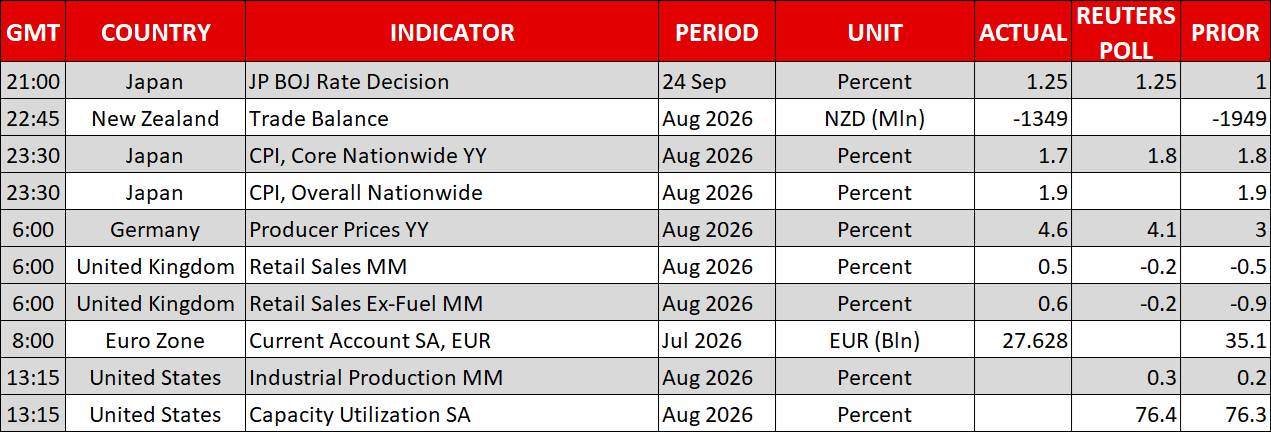
The BoJ raised rates by 25bps, confirming expectations. However, the hawkish statement and Governor Ueda’s comment that “there is a risk of underlying inflation overshooting the 2% price target given firms' wage and price setting behavior becoming more aggressive” failed to appease investors.
The two newcomers, Asada and Sato, voted against the hike and thus soured the market mood, pushing dollar/yen higher. It is hovering around the 156.74 area, having recovered half of the early September decline, and is up almost 3% from the September 8 trough of 152.88.
Equities forget the Fed meeting
Compared to the decent dollar performance, the Fed impact has quickly faded in US equities. Both the S&P 500 and Nasdaq 100 indices experienced a strong positive session yesterday (Thursday), with their respective futures contracts pointing to another solid opening today.
Thursday’s dip in oil prices and sovereign bond yields triggered this positive reaction, allowing us to believe that equity investors appear brave in the face of an aggressive Fed rate hiking cycle but are immensely worried about the US economic growth momentum. Rising prices, amidst a tighter labour market, could lead to a growth slowdown and potentially reduce funds available for the aggressive AI investment plans.


Gold buying by central banks has hit its highest rate since 2024.
Daily Technical Analysis: Gold Reclaims $3,900 After Hitting Its Lowest Level Since October 2025

Daily Fundamental Analysis: Wall Street Starts November on a Cautious Note Ahead of US Midterm Elections
Bitcoin tests key support as election uncertainty and tech sell-off weigh

Will gold climb back above $4,000?

Crypto turns gloomy

US midterm elections in the spotlight as stock market rout persists