-1162026812.png)
-1162026812.png)





The Fed’s Inflation Trap: When Higher Rates Feed the Fire

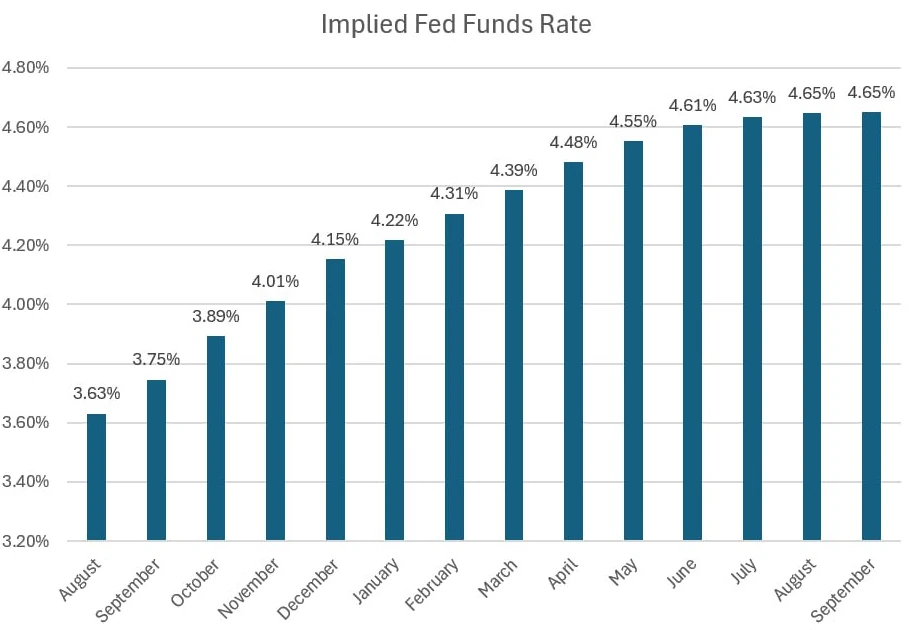 Markets are now discounting close to 100 basis points of additional Federal Reserve tightening over the coming twelve months — broadly equivalent to almost four further quarter-point increases. On the surface, the logic is conventional: inflation remains persistent, so monetary policy must become more restrictive. Yet with US government debt at its present scale, the transmission mechanism may be considerably less straightforward than it once was.
Follow the money. The Fed raises rates, borrowing costs move higher and the Treasury gradually refinances maturing debt at more expensive levels. Even if issuance policy succeeds in limiting pressure at the long end of the curve, the government’s overall interest burden continues to increase. What appears as a fiscal cost to Washington is simultaneously income for somebody else: every additional dollar of interest expenditure ultimately becomes revenue for the holders of US government securities.
Those creditors extend far beyond individual bond investors. Treasuries sit throughout the institutional financial system — in pension portfolios, money-market funds, banks, insurers and investment vehicles. A proportion of the additional income is recycled into financial markets; another proportion eventually reaches households through interest income, pensions, distributions and investment returns. Higher rates therefore produce two opposing forces: they make borrowing more expensive, but they also increase the income received by holders of interest-bearing assets.
That distinction becomes increasingly important as the government’s debt burden expands. Conventional monetary tightening works by suppressing credit creation, investment and consumption. But when higher rates simultaneously produce a substantial increase in government interest expenditure, part of that restraint can be offset by an expanding stream of income flowing from the Treasury into the private sector. The larger the debt stock, the larger this countervailing mechanism can potentially become.
Then comes the uncomfortable part. Several months pass and the Fed examines the next inflation readings. Price pressures have not subsided sufficiently. Policymakers conclude that financial conditions remain too loose and deliver another increase. Treasury refinancing costs rise again, government interest expenditure expands further, and still more income flows towards creditors. The medicine becomes stronger — but so does one of its unintended side effects.
This is the potential trap. At sufficiently high levels of public indebtedness, monetary tightening may cease to function purely as a mechanism for removing demand from the economy. Higher rates punish borrowers whilst rewarding creditors, and the US government happens to be the world’s largest borrower. The Fed could therefore find itself raising rates to suppress inflation whilst, at the margin, creating precisely the income flows that make inflation more persistent — only to look at the next set of data and conclude that rates need to rise again.Trade smart with Headway


Gold buying by central banks has hit its highest rate since 2024.

Daily Technical Analysis: Gold Reclaims $3,900 After Hitting Its Lowest Level Since October 2025

Daily Fundamental Analysis: Wall Street Starts November on a Cautious Note Ahead of US Midterm Elections

Bitcoin tests key support as election uncertainty and tech sell-off weigh

Will gold climb back above $4,000?

Crypto turns gloomy

US midterm elections in the spotlight as stock market rout persists