




Dollar gives up post-CPI gains as yields sink on AI fears

Hot US inflation revives hawkish Fed bets
Inflation in the United States accelerated in September, with the headline rate of CPI jumping to 3.7% from 3.4%. More worryingly, underlying inflation also rose more than expected, as core CPI ticked up to 2.6%, casting doubt on claims that the energy price shock has yet to generate second-round effects on inflation.
Aside from fuel prices, shelter costs and broader services prices also exerted upward pressure on the consumer price index in September.
However, whilst sounding worried about the inflation outlook, Fed officials refrained from signalling a faster pace of tightening. From the latest round of speakers, only Chicago Fed President Austan Goolsbee appeared to sound the alarm on inflation.
Investors initially upped their bets of Fed rate hike expectations, pushing up the odds for an October move as well as for accumulative tightening for 2027. However, once the dust settled, expectations were scaled back to only a slightly more aggressive path than prior to the data.
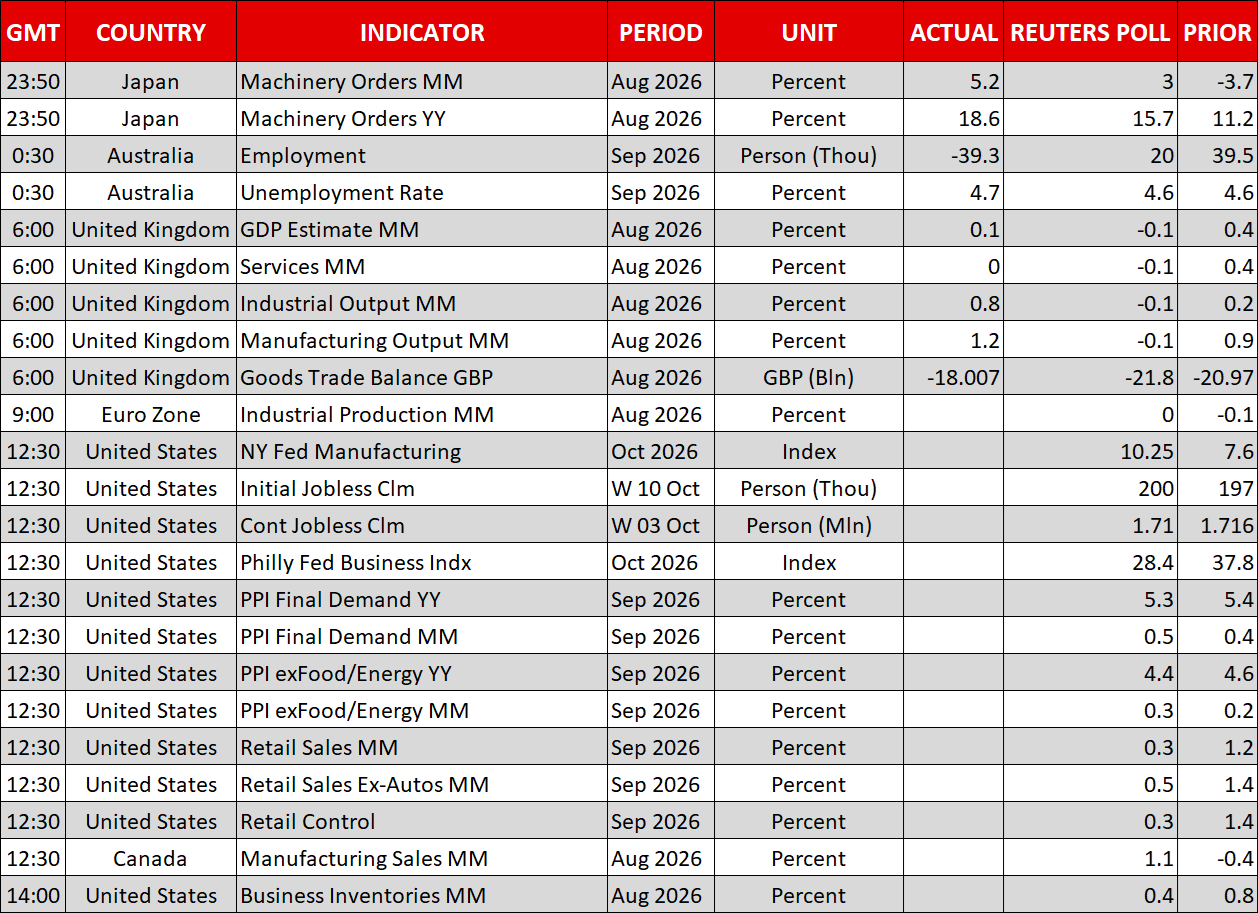
Inflation will stay in focus on Thursday, as producer prices are due for the same month, along with retail sales figures. However, with Fed Chair Kevin Warsh scheduled to speak early on Friday, today’s market reaction to the latest US data might be a bit more muted.
Dollar whipsaws as yields pull back from CPI-led spike
The US dollar rallied to a one-and-a-half-year high yesterday against a basket of currencies on the back of the strong CPI numbers, as Treasury yields spiked.
The 10-year Treasury yield hit 5.33%, while the two-year yield jumped to 4.95%. However, the bond selloff quickly turned into a bond rally as stock market jitters sent investors back to the perceived safety of government bonds.
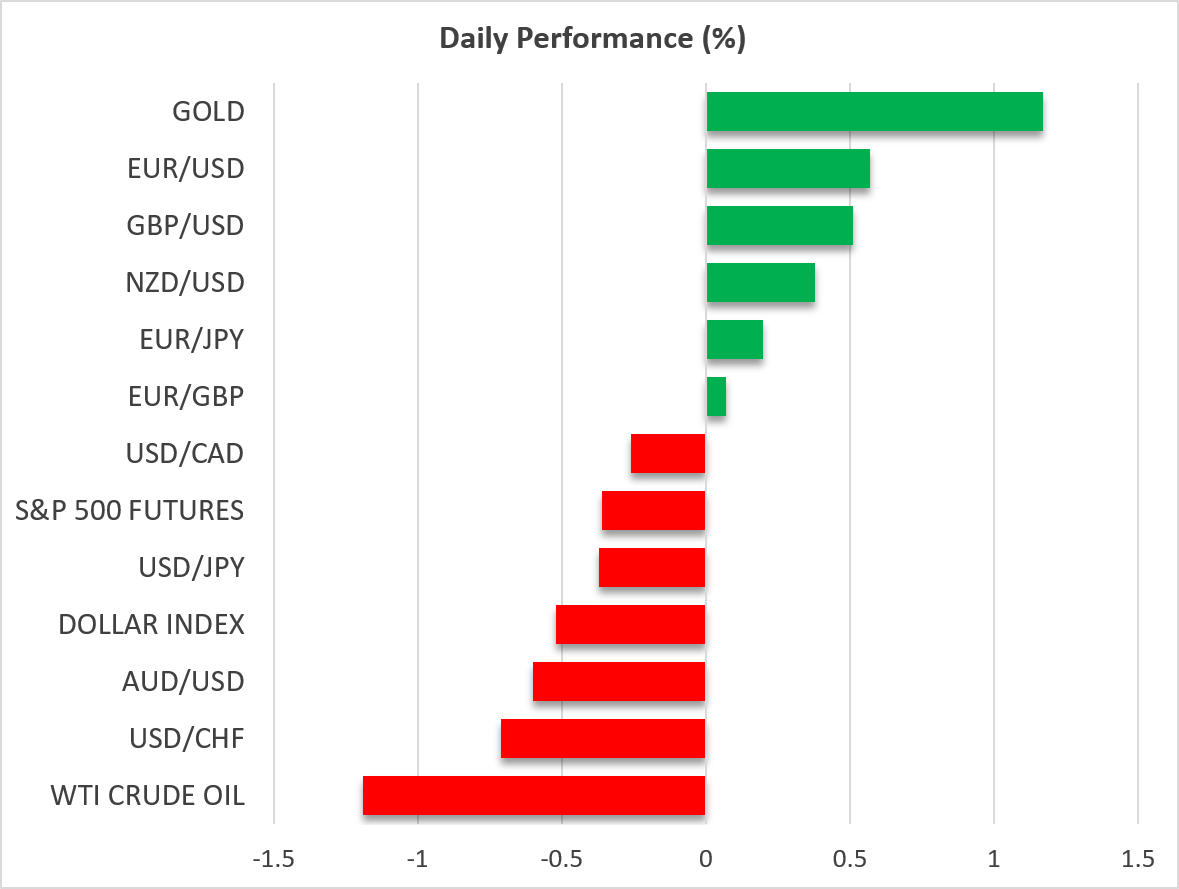
The dollar whipsawed as yields reversed sharply lower, slipping from a three-week high of 158.94 yen to around 157.80 yen today. The euro rebounded back above $1.12 after plunging to $1.1112, while the pound recovered to around $1.3260, receiving an additional boost today from better-than-expected UK GDP readings for August.
The New Zealand dollar also bounced back, though there was little reaction to comments by the RBNZ’s chief economist Paul Conway, who kept the door open to an October hike.
However, the Australian dollar bucked the trend and slid to $0.6931 following disappointing jobs numbers out of Australia. RBA rate-hike expectations took a slight hit after employment unexpectedly fell by 39.3k in September.
Gold recovers but oil prices slip
Gold is enjoying gains of more than 1% on Thursday, rebounding to around $4,150 following a dip to $4,073 yesterday when yields surged after the CPI report. With government bonds coming back in demand, pushing yields lower, gold has been thrown a bit of a lifeline as it was in danger of plummeting below $4,000.
Today’s weaker oil prices are further aiding gold, shifting attention away from the worrying inflation outlook and towards the fresh AI jitters.
WTI oil futures are trading lower at $94.39 and Brent crude futures are down at $103.81. Although attacks on ships and energy infrastructure continue in the Middle East by Iranian and Houthi forces, there is some relief today on reports that President Trump is considering easing sanctions on shadow fleet vessels in a bid to lower global freight rates that have skyrocketed due to the Middle East conflict.
AI stocks seek to stop slide
Unable to stay out of the limelight for long, the AI trade stole some attention away from the CPI report, as the selloff in chip stocks intensified after the latest gains in bond yields. Stocks were already treading water this week amid renewed fears about an AI bubble.
The recent rise in long-term borrowing costs has put the spotlight back on AI spending and how long the bullish demand outlook can be sustained. Overoptimistic expectations were further rattled this week on news that Chinese chipmaker CXMT has had a major breakthrough with its chip designs, posing a threat to Korean and US rivals.
Robust earnings by ASML Holding yesterday and TSMC today did little to calm markets, while mixed results from Wall Street’s major banks have also not done much in lifting sentiment. The biggest boost has in fact come from IPO hopeful Anthropic, which reported a 46% increase in Q3 revenue.
South Korea’s KOSPI slumped 7.6% today, led by an 11% drop in SK Hynix shares. But European stocks are mixed, pointing to an easing in the selloff. US futures also appear to be on the mend, with only the Nasdaq remaining under heavy pressure.

EBC Markets Briefing | Aussie dollar propped up by US mid-term election uncertainty
Gold Edges Higher as Dollar Weakens Ahead of US Midterm Results

Gold/Silver & Gold/Platinum Ratios: Deconstructing the Metals Sell-Off Divergence

GBPUSD Edges Towards 1.3463 as Traders Brace for the Bank of England Decision

Weak NZ Jobs Data Keeps NZDUSD Under Pressure

Gold buying by central banks has hit its highest rate since 2024.
Daily Technical Analysis: Gold Reclaims $3,900 After Hitting Its Lowest Level Since October 2025