





Fed hike bets support dollar, yen falls to multi-decade low

Will the Fed hike rates in September?
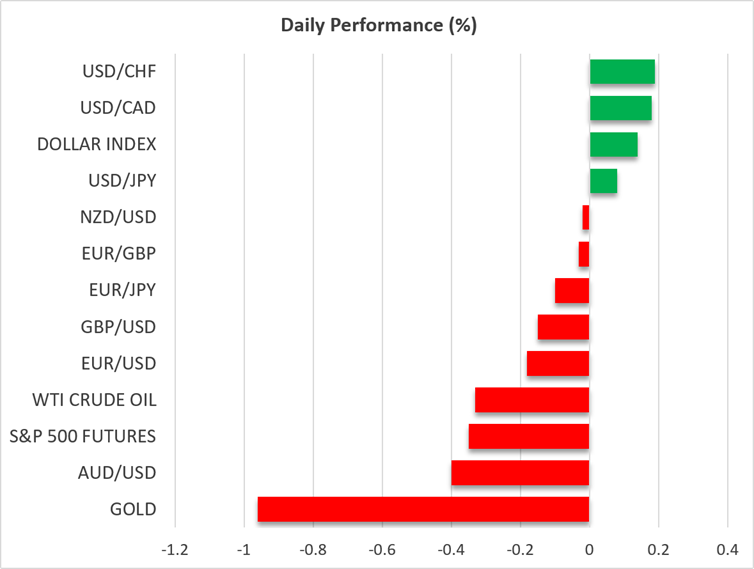
The US dollar traded mixed against its major counterparts yesterday, gaining ground against the yen and the franc, weakening against the risk-linked kiwi, aussie and loonie, and ending the day virtually unchanged against the euro and the pound. The greenback is slightly higher against all today.
The greenback is likely holding its ground due to yesterday’s JOLTS job openings data lifting Treasury yields and bolstering Fed rate hike expectations. According to Fed funds futures, there is a 90% chance of a quarter-point hike in September, while another one is nearly fully penciled in for March. The probability of the Fed pressing the hike button this month stands at 34%.
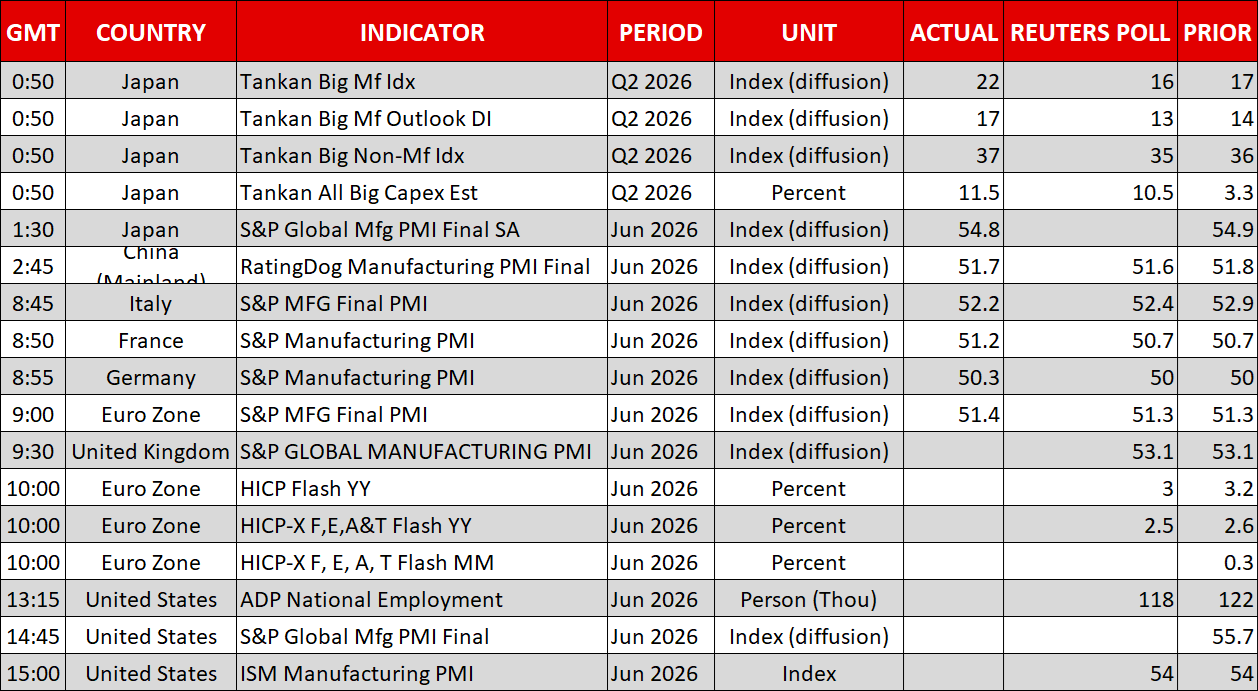
Today, the spotlight is likely to turn to the ADP private employment report and the ISM manufacturing PMI, both for June, ahead of tomorrow’s all-important nonfarm payrolls. Although oil prices have fallen back to their pre-war levels, the impact of the energy shock resulting from the war in Iran may not yet have been fully transmitted to the broader economy. Thus, upbeat data today and tomorrow may increase the chance of the Fed pressing the rate hike button in July instead of waiting until September.
What’s more, investors may also be eager to hear remarks by Fed Chair Kevin Warsh, who will participate in a panel discussion at the ECB Forum in Sintra. He will appear alongside ECB President Christine Lagarde, BoE Governor Andrew Bailey, and BoC Governor Tiff Macklem.
Is there a floor for the yen?
The yen kept bleeding, allowing dollar/yen to climb above 162.00 for the first time in 40 years. The pair hit resistance at around 162.83 and pulled back, but it seems the bulls remain in control despite repeated warnings by Japan's finance minister Katayama that they remain prepared to take appropriate action if deemed necessary.
It seems that yen traders are worried that the BoJ may never be hawkish enough. Another quarter-point increase is nearly fully penciled in by the end of the year, but Prime Minister Takaichi’s calls for rates to stay low to help boost growth may have been casting a shadow about the BoJ’s strategy.
The BoJ is not obligated to abide by Takaichi’s wishes, but the Prime Minister could very well influence the Bank’s future decisions through her appointees. Her first choice voted against the June hike, while the second one, who joined on Tuesday, is also seen favoring looser policy moving forward. What’s more, the term of two hawks will end next summer, allowing Takaichi to appoint more doves within the Board.
As for intervention, Japanese authorities may be waiting for Friday, which is a US public holiday, to press the button as thin liquidity conditions may allow for a bigger impact.
Stocks rise, gold extends slide, geopolitics do not impact oil
On Wall Street, all three of the major indices closed in positive territory yesterday, with the tech-heavy Nasdaq gaining the most, despite the increasing likelihood of a Fed rate hike before the turn of the year. It seems that stock investors are willing to cheer data sets pointing to economic resilience, even if this means giving the green light to higher borrowing costs.
Gold, however, drifted lower, clearing the $4,000 psychological region, as higher Treasury yields and increasing Fed hike bets are driving higher the opportunity cost for holding the precious metal. The next support area may be found at around $3,915, marked by the lows of October 2025.
Regarding the Middle East, peace talks between US and Iran appear to be faltering as Tehran declined direct talks with US negotiators until outstanding ceasefire disputes are resolved. Instead, Iran has opted for indirect talks through mediators. Nevertheless, oil prices continued drifting south and may remain largely unaffected as long as the Strait of Hormuz remains open.


Brent has soared above $100. Is this just the beginning?
Today Fundamental Analysis: Brent Holds Around $100 Amid Fresh US-Iran Escalations

S&P 500 Stepped From Record Highs, but Market Breadth Is Flashing a Warning 💥

Bitcoin: the golden cross signals an uptrend, but not right away

US Inflation Data and Elevated Asset Valuations — Nasdaq, S&P 500 and Gold

China50 Tests 14,600 Resistance as Investors Await Inflation Data

Dollar slips, yen surges as Middle East tensions escalate