





Gold is holding on to $4,000

Gold is holding on to $4,000
• The Fed’s hawkish signals risk dragging gold down.
• Gold is more dependent on equities than in previous years.
A resurgence in demand for risk assets, fuelled by high expectations surrounding Anthropic’s IPO, has allowed gold to regain its footing. The precious metal is used as a liquidity tool to meet margin requirements on equities. Consequently, the recent fall in the S&P 500 also pushed it below $4,000 per ounce. This has triggered increased demand from Chinese households, but it is clearly insufficient to spark a fresh wave of gains.
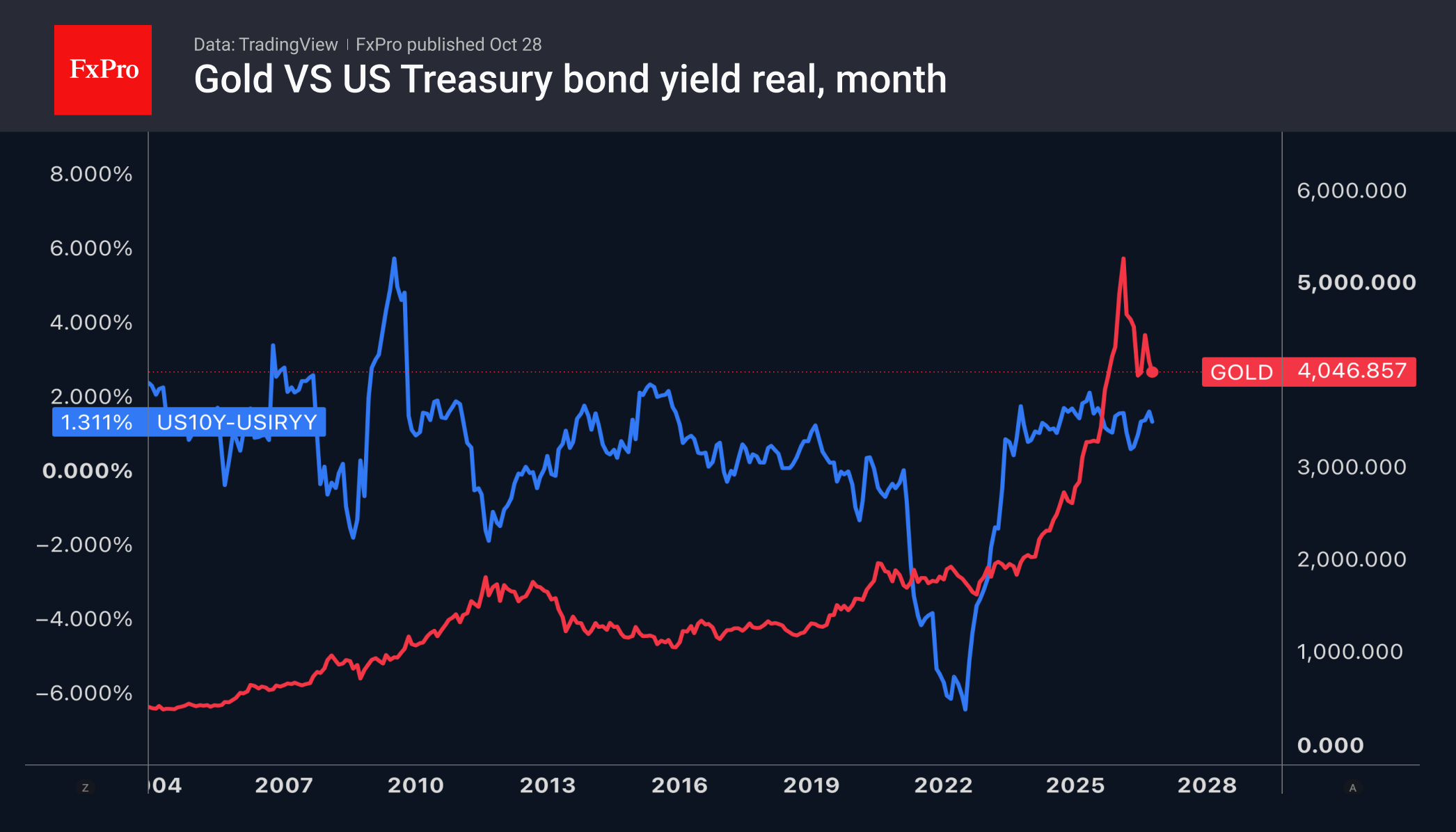
For decades, gold has been highly sensitive to real yields on US Treasury bonds. Both assets were seen as a means of preserving the purchasing power of money. Furthermore, rising bond yields reduce the appeal of investing in precious metals, while the associated capital outflows from ETFs put pressure on prices. However, in 2022, the link was lost due to the freezing of Russia’s gold and foreign exchange reserves. Confidence in Treasuries fell, whilst confidence in gold, by contrast, rose.
In January–September, the historical correlations returned; however, in October, gold plummeted alongside Treasury bond yields. When yields began to rise, the precious metal rebounded from its local low, but this appears more like a speculative reflex, whereas changes in intermarket correlations deserve more attention.
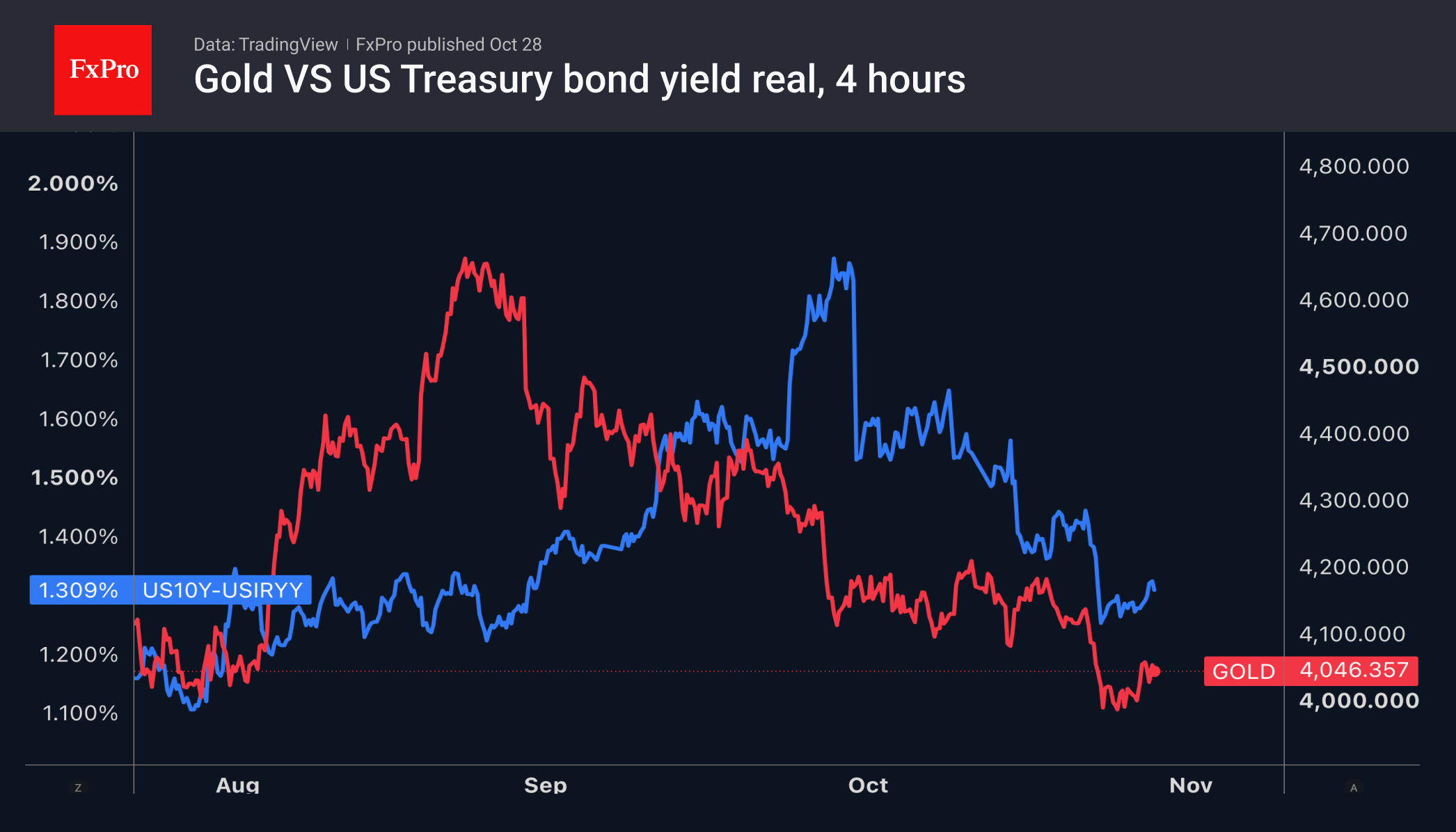
The equity market now plays a much greater role in gold’s fortunes than it used to. Over the past four years, colossal sums of money have flowed into it. In 2026, there was a rapid shift of capital out of the bond market, and gold could not remain unaffected.
The Fed’s stance also plays a significant role in gold’s often illogical price movements. If it were to follow the rules, given the improvement in US macroeconomic data and high oil prices, the central bank would need to tighten policy. It is not doing so. Consequently, the risk of a sharper rate hike in the future is mounting, keeping gold under pressure.
Gold risks falling back below $4,000 per ounce if the FOMC keeps rates on hold in October but remains divided. In that case, sell-offs will occur not only in the bond market but also in the equity market.
The FxPro Analyst Team


OIL NEARS $117: COULD PRICES REACH $130 BEFORE THE END OF THE YEAR?

The Fed will set the course for the markets
EBC Markets Briefing | Wall St stunned by Brazil's status quo vote

Stocks and dollar climb ahead of Fed, kiwi sinks on RBNZ shock

Crypto recovers as Fed decision looms

Dollar Firms and Oil Rebounds Ahead of Fed Decision

FOMC Today, ECB Tomorrow — Will GOLD Break Above $4,160 or Fall Below $3,950?