





The labour market failed to boost the dollar

The labour market failed to boost the dollar
· Strong US employment figures were not enough to prevent the dollar from falling.
· Geopolitics and risk appetite remain the key drivers.
The US dollar came under pressure from sellers on Friday, and a strong labour market report failed to reverse the trend, merely slowing the pace of the decline. Non-farm payrolls rose by 115K in April, almost doubling expectations thanks to strong hiring in the private sector (+123K). Unemployment remained at 4.3%. Although wage growth accelerated from 3.4% y/y to 3.6%, this was below the forecast of 3.8%. The labour market is not showing any signs of distress.
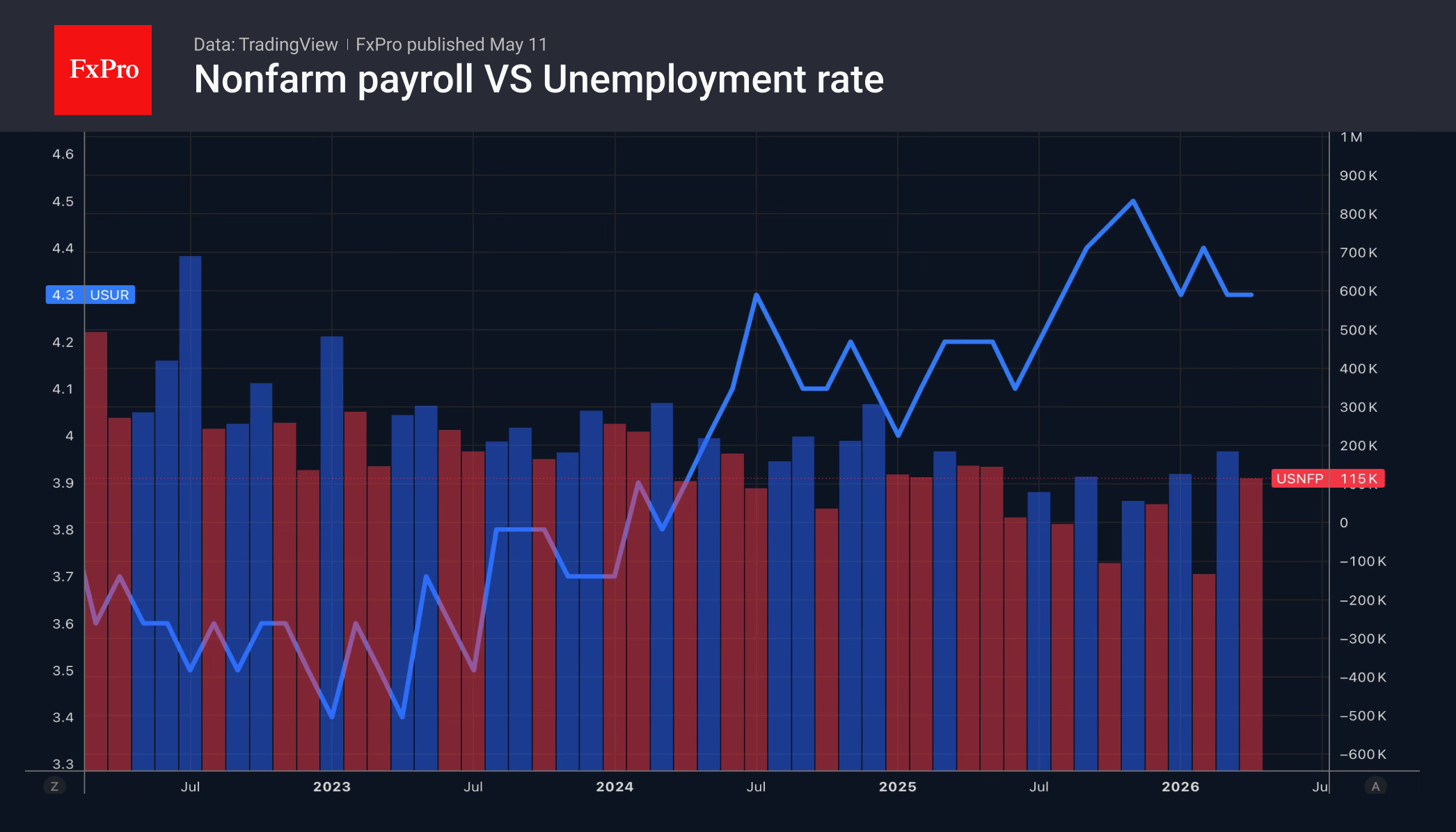
Strong economic data has pushed futures markets to increase the probability of the Fed tightening monetary policy in 2026 from 14% to 21%. Meanwhile, expectations for a rate cut have dropped from 12% to just 6%. Normally, this would support the US dollar, but the market appears to be focused elsewhere.
One reason is the reduced demand for the dollar as a safe-haven asset. Investors continued buying into the S&P 500, boosting demand for US assets and creating a “Goldilocks” style environment, where economic growth slows but remains resilient enough to support risk appetite. At the same time, markets were also closely watching negotiations between Washington and Tehran.
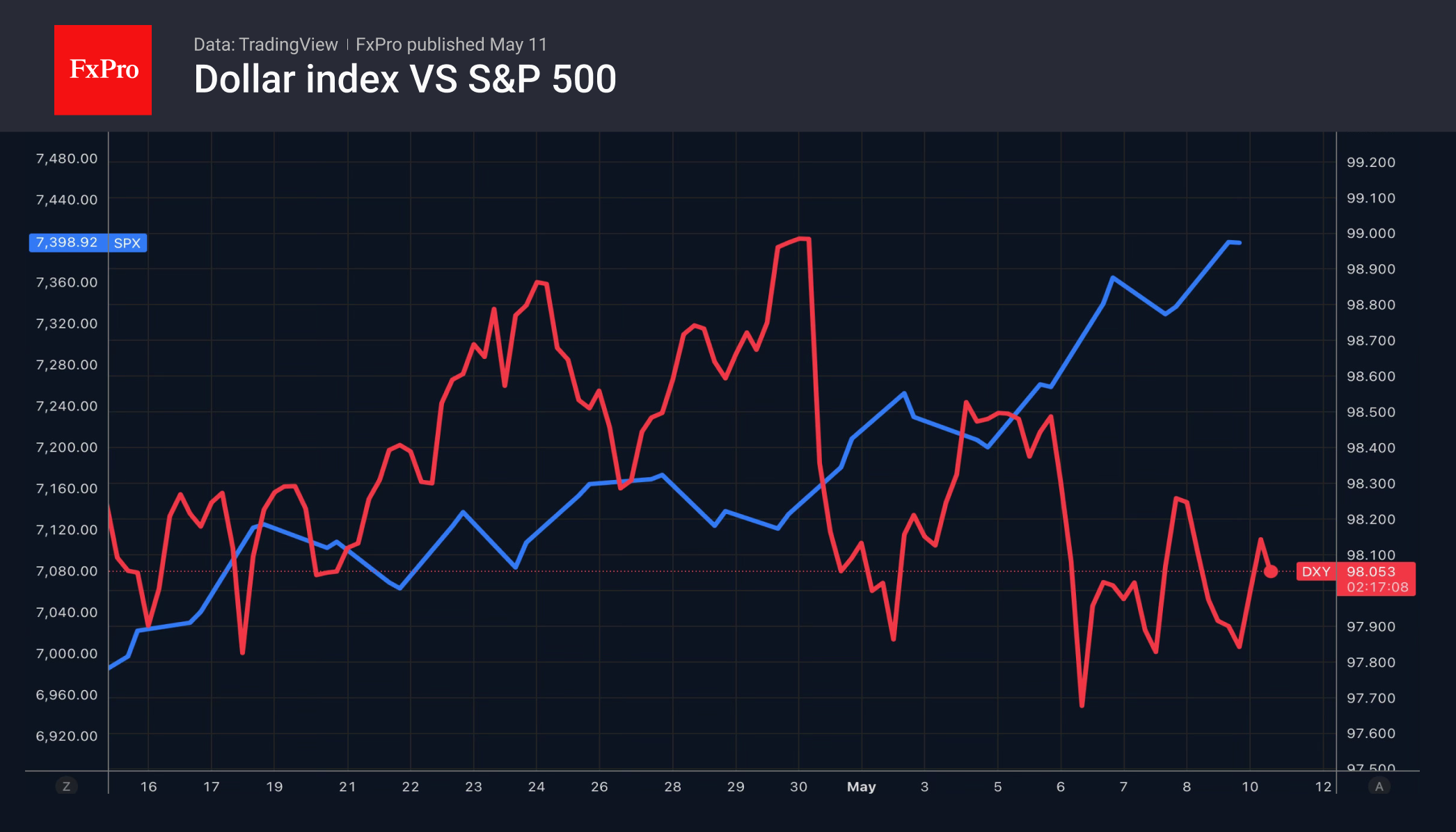
To the markets’ disappointment, Iran rejected the Americans’ proposals and put forward its own conditions. Donald Trump considers them completely unacceptable and intends to resume Operation Inherent Resolve. A week earlier, he provoked Tehran’s anger and an escalation of the geopolitical conflict. History now risks repeating itself. In addition, the escalation of the situation in the Middle East will boost demand for the US dollar as a safe-haven asset.
That said, there is still a glimmer of hope for a peaceful resolution to the conflict. Neither Washington nor Tehran has yet to announce that talks will not take place. Moreover, there is a chance that the meeting between Donald Trump and Xi Jinping will be followed by pressure on Iran—at the very least, psychological pressure.
Rising oil prices and fears of accelerating US inflation in April forced gold to take a step back after several days of gains. As long as consumer prices remain high, central banks, led by the Fed, will continue to consider raising interest rates. In such conditions, the non-interest-bearing precious metal finds itself in an uncomfortable position.
By the FxPro Analyst Team


CPT Markets Returns to Forex Expo Dubai 2026 to Connect with the Global Trading Community

Apple Stock Slips After iPhone 18 Launch as AI Growth Expectations Remain in Focus

US Treasury Triples Long-Term Bond Buyback Size

Oil Breaks Above $100 as Supply Risks Push Brent Higher

Why CPI Data Can Trigger Market Moves Across the Dollar, Gold and Stocks

Brent has soared above $100. Is this just the beginning?
Today Fundamental Analysis: Brent Holds Around $100 Amid Fresh US-Iran Escalations