-482026738.png)





USDINR Slips Towards 96.30 as RBI Measures Lift the Rupee

Key Takeaways
- USDINR trades near 96.321 after falling 0.63%, as the rupee strengthens following fresh RBI intervention.
- The RBI has launched a special dollar-supply window for three state-owned oil companies, aiming to reduce spot-market dollar demand.
- A 20% foreign exchange risk reserve now applies to qualifying rupee derivative contracts above $2 million, raising the cost of certain hedges.
- The threshold for certain derivative transactions without underlying exposure has dropped from $100 million to $5 million.
- Traders are watching 96.20 support, with 96.40 and 96.60 as key resistance levels.

The Indian rupee strengthened against the US dollar on Monday after the Reserve Bank of India announced measures to curb dollar demand and stabilise the currency market.
The move follows months of pressure, with the rupee down nearly 7% against the dollar in 2026 on rising crude oil prices, elevated US bond yields and foreign investment outflows. Traders are now assessing whether the RBI’s steps can support a lasting recovery.
Why Traders Are Watching USDINR
The RBI announced the measures on 10 October, ahead of the special dollar facility becoming operational on Monday. Through designated banks, the central bank will supply dollars directly to Indian Oil Corporation, Hindustan Petroleum Corporation and Bharat Petroleum Corporation. These companies need large amounts of dollars to fund India’s crude imports, so routing their purchases through a dedicated facility may reduce immediate demand in the wider spot market.
The central bank also tightened rules on foreign exchange derivatives. Dealers must hold a cash reserve equal to 20% of the rupee value of qualifying contracts above $2 million that involve buying foreign currency against the rupee to hedge current account exposures. The threshold for certain derivative transactions without underlying exposure has been lowered from $100 million to $5 million.
The measures have already affected offshore markets. The one-month USDINR non-deliverable forward fell by roughly 40 paise in thin trading after the announcement, an early sign of rupee strength.
Key factors influencing USDINR include:
- RBI policy: The dollar-supply window and derivative curbs could reduce spot-market dollar demand.
- Crude oil prices: Brent is trading around $103 per barrel, and higher energy costs increase India’s dollar needs.
- US Treasury yields: Elevated yields can keep the dollar supported by attracting capital to US assets.
- Foreign portfolio flows: Continued outflows from Indian equities and other assets could add pressure on the rupee.
Key Trading Levels
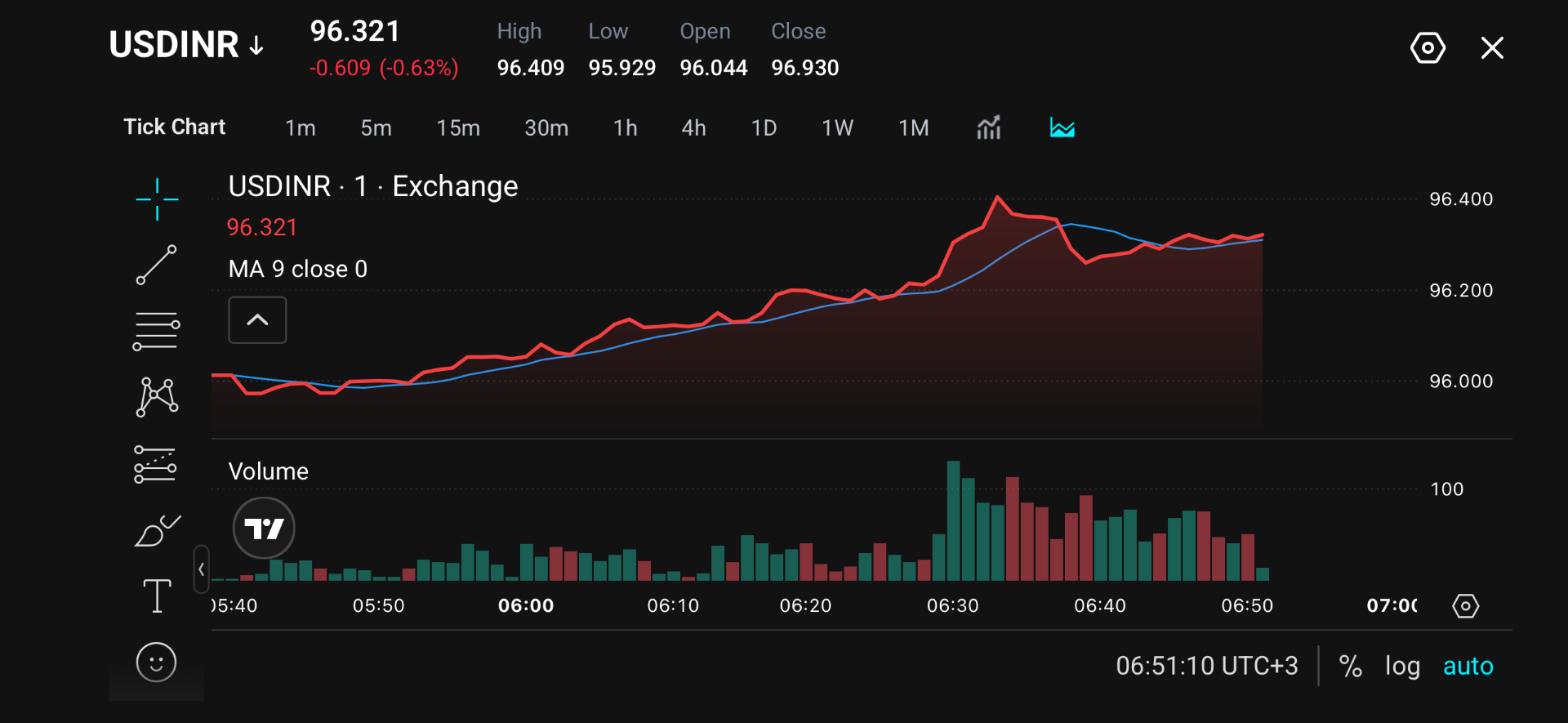
USDINR recovered intraday from the 96.00 region towards 96.40 before consolidating near 96.32. The session high is 96.409 and the session low is near 95.93.
The 96.40 level is the immediate resistance. A sustained move above it could open the way towards 96.60, with 96.80 as a further recovery target and a sign that dollar demand is returning despite the RBI’s intervention.
On the downside, 96.20 is the first technical support. A break below it could expose 96.00, followed by 95.93. A sharper decline could develop if the dollar-supply facility eases spot-market pressure more effectively than expected, particularly if oil prices and global dollar demand cool.
USDINR Prediction: Can the Rupee Extend Its Recovery?
The near-term outlook depends on whether the RBI’s measures can keep dollar demand in check while external conditions remain uncertain. A short-term break below support would not necessarily signal a lasting change in the rupee’s broader trend.
If crude prices ease and US yields stabilise, USDINR could extend lower towards 96.00 and 95.93. If oil stays elevated or outflows continue, a move back above 96.40 could bring 96.60 into focus.
For a deeper analysis of USDINR’s technical levels, RBI policy and potential scenarios, read this article.


US Midterms: Early Democratic Senate Wins Sink Dollar and Drag Futures Lower
EBC Markets Briefing | Aussie dollar propped up by US mid-term election uncertainty

Gold Edges Higher as Dollar Weakens Ahead of US Midterm Results

Gold/Silver & Gold/Platinum Ratios: Deconstructing the Metals Sell-Off Divergence

GBPUSD Edges Towards 1.3463 as Traders Brace for the Bank of England Decision

Weak NZ Jobs Data Keeps NZDUSD Under Pressure

Gold buying by central banks has hit its highest rate since 2024.